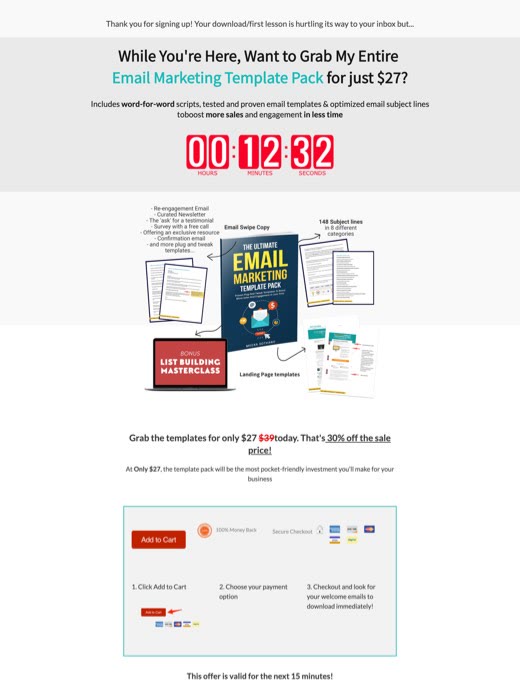
A tripwire is a very low-price first offer, often $5 to $37, that turns a visitor into a buyer. The money is not the point. The first purchase is. Once someone has bought from you, buying again is easier, and you can show them a larger offer. The swipes below show tripwires for playbooks, templates, courses and ad vaults, and the order bumps and upsells that often follow.
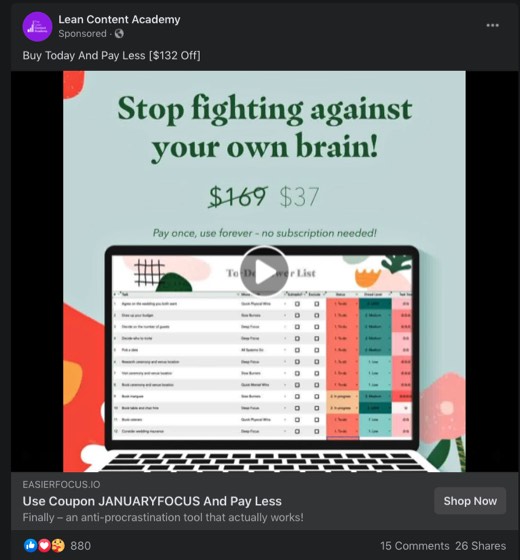
The biggest step for a new customer is the first payment. A tiny price makes that step easy: the risk is low, and a good result builds trust fast. The offer still needs to feel valuable. A crossed-out higher price, a specific promise and a clear diagram or bullet list stop it looking cheap. Tripwires work best as part of a sequence. The checkout may add an order bump, and the thank-you page may offer an upsell. The tripwire product should solve a small, real problem and naturally lead to the bigger one. If it feels like a teaser with nothing inside, the buyer will not come back.
2How to use it in your copy
Pick a small, useful product that solves one problem.
Price it low enough to be an easy yes.
Show a higher value or crossed-out price to avoid looking cheap.
Make the promise specific in the headline and bullets.
Plan the order bump or upsell that comes next.
3Mistakes to avoid
Selling a tripwire that feels like an empty teaser.
One saved ad, email or sales page every week, with a short note on why it works and how to use the idea in your own copy. Free, one email, unsubscribe any time.
Sent with Systeme.io, which we also recommend for building pages like these.
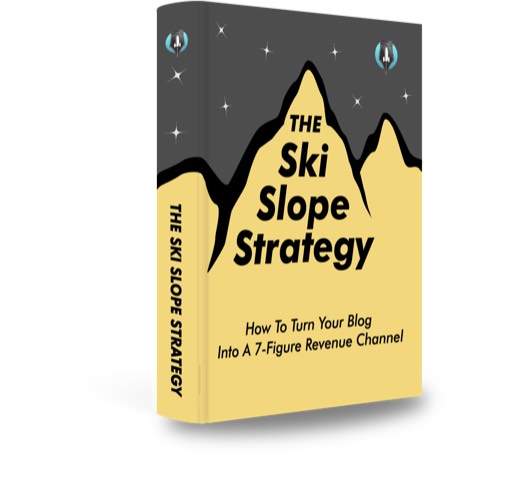


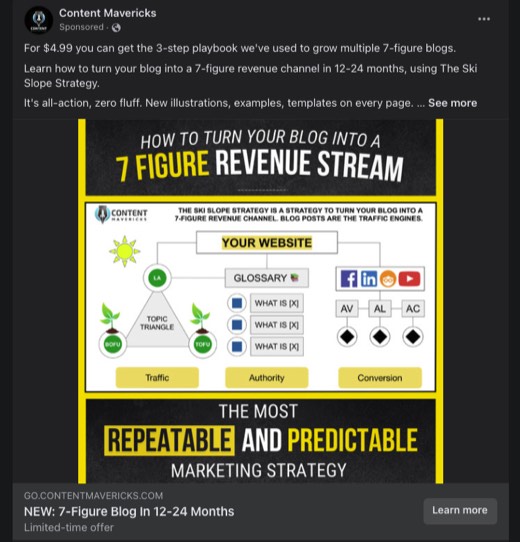 Content Mavericks' $4.99 Ski Slope Strategy adA $4.99 price sits above a diagram of the whole strategy, so a tiny payment buys a clear method.
 Total Health's $7 mental health course pageA $7 course with a countdown, endorsements and a 60-day guarantee adds a one-time offer at checkout.
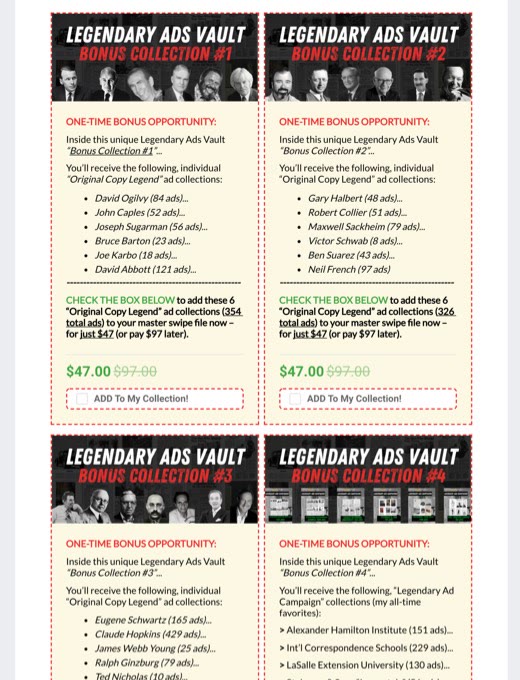
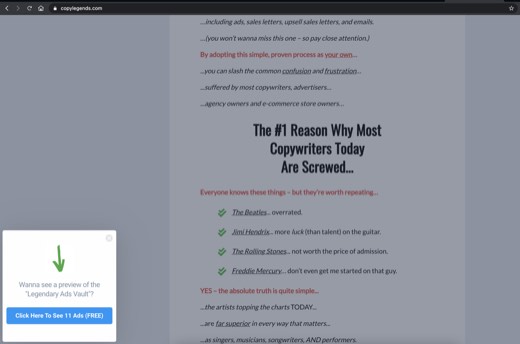 Copylegends home page with ads vault popupA $7 ads vault is followed by four collection add-ons at checkout, turning a small sale into a bigger order.