1How re-engagement works
Existing customers already trust you, so the copy does not need to prove much. It needs to give a timely reason to act again. That might be a seasonal offer, a better price to stay, or a quick question that brings a quiet reader back into the conversation. Simple works best. One offer, one button and an honest note about terms. A cancel-flow offer must respect the person's choice. Keep the cancel option visible, just smaller. Feedback links help too. They show who is still engaged, and asking for an opinion often brings back someone who had drifted away.
2How to use it in your copy
- Pick a group: quiet subscribers, lapsed users or people cancelling.
- Give one timely reason to act, such as a deal or a question.
- Keep the message short with one clear action.
- State terms honestly, including renewal prices.
- Let people leave easily if they still want to.
3Mistakes to avoid
- Hiding the cancel button to trap people.
- Sending the same generic offer to every inactive user.
- Re-engaging with a long pitch instead of one simple ask.
4Three examples, and what they do
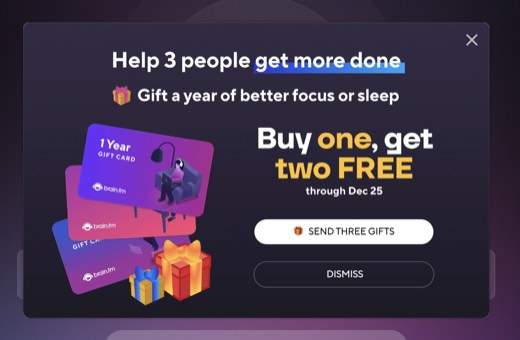 Buy one, get two free gift popupAn in-app holiday popup gives existing users a buy one, get two free deal with a Dec 25 deadline.
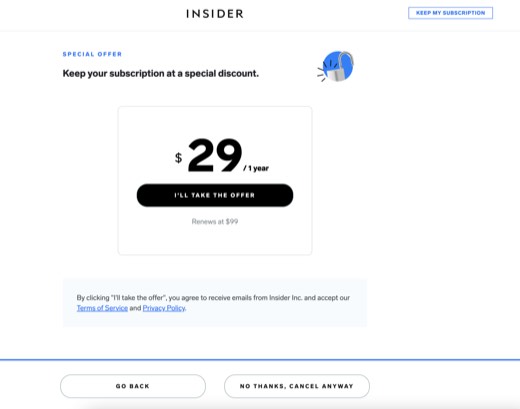 Insider's cancel-flow discount offerA leaving subscriber sees one big price, one button and an honest renewal note, with the cancel option still visible.
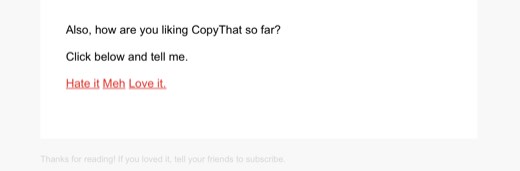 CopyThat's one-click feedback email footerThree one-word feedback links let readers reply with one tap and show the sender who is still engaged.
5Questions
What is a re-engagement campaign?
It is a message or offer aimed at existing customers or subscribers who have gone quiet. Its goal is to bring them back or keep them from leaving.
What should a win-back email say?
Keep it short. Remind them of the value, give one reason to return now and offer an easy way to act or opt out.
Are cancel-flow offers fair to customers?
They can be, if the offer is real and cancelling stays easy. Hiding the cancel option damages trust.