
1How pay what you want works
When buyers choose the price, two things happen. More people can say yes, because the lowest option fits a tight budget. And many pay more than the minimum, because they want to be fair. The trick is to guide the choice. A crossed-out full price or a suggested amount sets an anchor, so people pick near it rather than at the floor. A short reason, such as making a class open to everyone, helps people feel good about whatever they pay. Limiting the choice to a few buttons works better than an empty box. Too much freedom can stall the decision.
2How to use it in your copy
- Set a fair full or suggested price as an anchor.
- Offer two to four price options, not an empty box.
- Explain in one line why pricing is flexible.
- Make the lowest option clearly acceptable.
- Keep one button that works for any level chosen.
3Mistakes to avoid
- Leaving an empty price box with no guidance.
- Making people feel guilty for choosing the lowest option.
- Offering so many levels that choosing is hard.
4Three examples, and what they do
 Meditation Adventure choose-your-price pageA struck-through $99 above three price buttons and a closing date lets the buyer choose with the deadline in view.
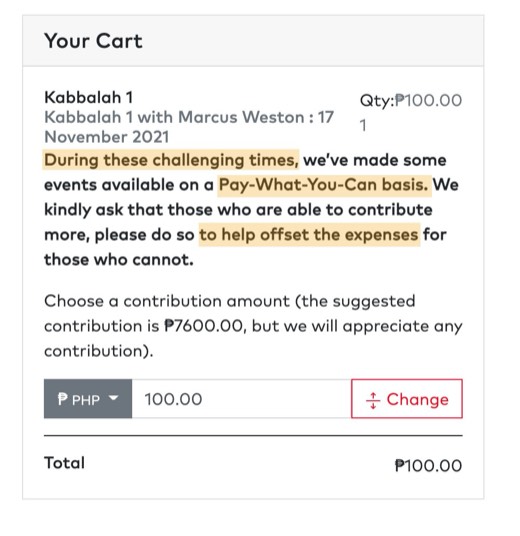 Pay-what-you-can event cart pageIt explains the reason for flexible pricing and shows a suggested amount, so people anchor high but never feel shut out.
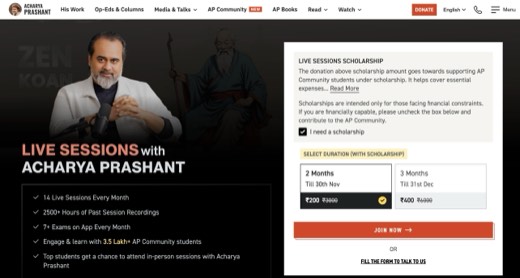 Scholarship Plan Picker With Strikethrough PricesA scholarship checkbox beside struck-through list prices makes a lower price feel earned and fair.
5Questions
Does pay what you want pricing lose money?
Not always. More people can buy, and many choose above the minimum when there is a suggested price and a clear reason.
Should I give a suggested price?
Yes, in most cases. A suggested amount guides buyers and lifts the average price paid.
What is the difference between pay what you want and a scholarship price?
Pay what you want lets everyone pick. A scholarship price is a lower option offered to people who need it, often with a short form or checkbox.