
1How numbered list works
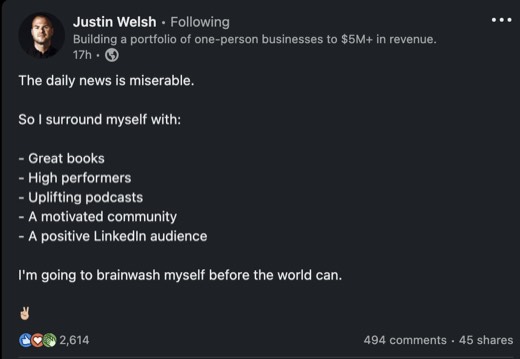
A number sets an expectation. The reader knows the size of the task before they start, which makes it easier to begin. Lists are also easy to scan, so people can jump to the item that catches them. Odd or specific numbers, like nine or fifteen, can feel more considered than round ones. In short posts, a list of blunt, parallel lines is easy to read and share. The trick is to keep each item strong. One weak item makes the whole list feel padded. Some of the best lists end with a line that breaks the pattern on purpose, which gives the post its punch.
2How to use it in your copy
- Pick a number that fits the real content, not a round guess.
- Put the number in the headline or first line.
- Make each item short and start them the same way.
- Cut any item that is weaker than the rest.
- End with an item or line that lands hardest.
3Mistakes to avoid
- Padding the list to reach a bigger number.
- Writing items that repeat each other.
- Promising a number of tips and then wandering off the list.
4Three examples, and what they do
 Joe Hart's five rules for your twentiesFive short, blunt commands are easy to scan and share, and the last rule breaks tone on purpose for edge.
 Bookfox: 9 Sentence Shapes ThumbnailA number plus a gentle threat to your last draft makes writers curious and pushes the click.
 Meera Kothand's six-figure lessons postA pin-style graphic promises 15 lessons, then uses the post to lead readers into a free planning challenge.
5Questions
Why do numbered list headlines work?
They tell readers exactly what to expect and how long it will take. Lists are also easy to scan and share.
Do odd numbers work better in headlines?
Many writers find odd or specific numbers feel less made up than round ones. The real content should decide the number.
How long should a list post be?
As long as every item stays strong. Five to fifteen items is common, but a tight list of three can work too.