1How faq works
Readers scan for the one question that is bothering them. A clear FAQ lets them find it without reading the whole page again. Each answer removes a small reason to wait. The format also feels honest, because the seller is openly raising doubts rather than hiding them. The best FAQs are written from real questions: emails, comments and calls. They answer in short, direct lines and often end with a reassurance such as the guarantee or replay access. Placing the FAQ just before the last button means the reader who scrolls that far gets their answers right where they decide.
2How to use it in your copy
- Collect real questions from emails, comments and sales calls.
- Pick the five to eight that most often stop a sale.
- Answer each one in two or three plain sentences.
- Mention the guarantee, replay or support where it fits.
- Place the FAQ just before the final button.
3Mistakes to avoid
- Filling the FAQ with questions nobody asks.
- Giving long, vague answers that avoid the question.
- Hiding key terms, like refund rules, only in the FAQ.
4Three examples, and what they do
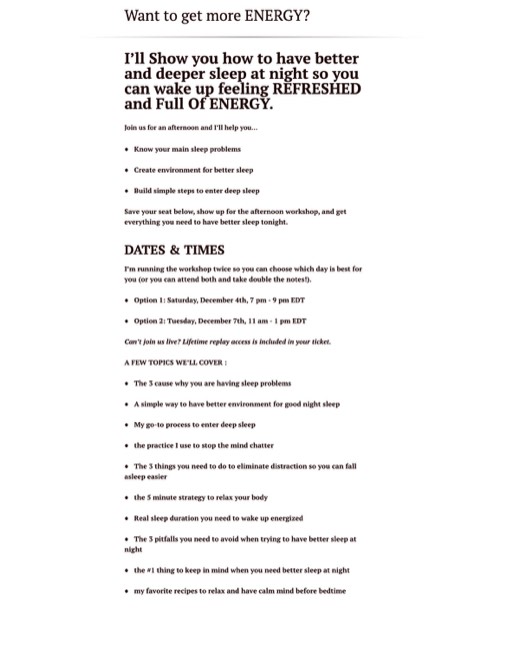 Better sleep workshop registration pageA short workshop page uses its FAQ to settle practical doubts, such as dates and replay access, before sign-up.
 Bijay Gautam's podcast launch workshop pageAfter guest experts, bonuses and attendee photos, an FAQ sits before the repeated register button to clear last doubts.
 Total Health's $7 mental health course pageA $7 course page adds an FAQ alongside a 60-day guarantee, so even a small purchase has its questions answered.
5Questions
Should a sales page have an FAQ section?
Yes, in most cases. It answers last-minute doubts near the buy button and helps readers who skim find what they need.
How many questions should an FAQ have?
Usually five to eight. Enough to cover the real objections, but not so many that the important ones get lost.
Where do I find FAQ questions?
From real customers: support emails, comments, sales calls and refund reasons. These show the doubts people actually have.